Heat Pump vs New Oil Boiler: What's the Best Choice for Your Irish Home?
Weighing up a heat pump against a new oil boiler? We compare upfront costs, running costs, SEAI grants, and suitability for Irish homes to help you decide.
Emergency Plumber Athlone
22 December 2025
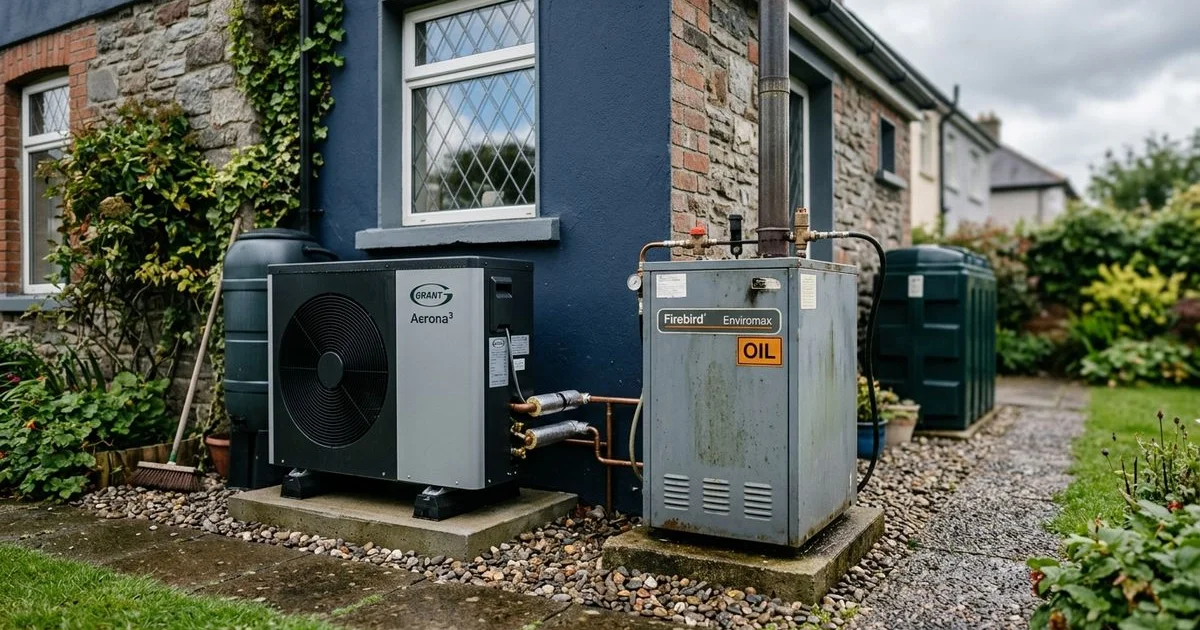
We hear the same question from homeowners every single week. People are trying to decide between a modern heat pumps setup or a traditional oil boilers replacement. Our professional service team installs both technologies across the midlands.
The debate over Heat Pump vs New Oil Boiler: What makes the most sense is harder than ever.
Global events have pushed heating oil prices to new highs in 2026. Government incentives for renewable upgrades have also shifted dramatically. We will break down the real-world costs, the updated grant figures, and the exact requirements for each system.
This guide gives you the practical facts you need to make a confident choice.
How Each System Works
Oil Boiler
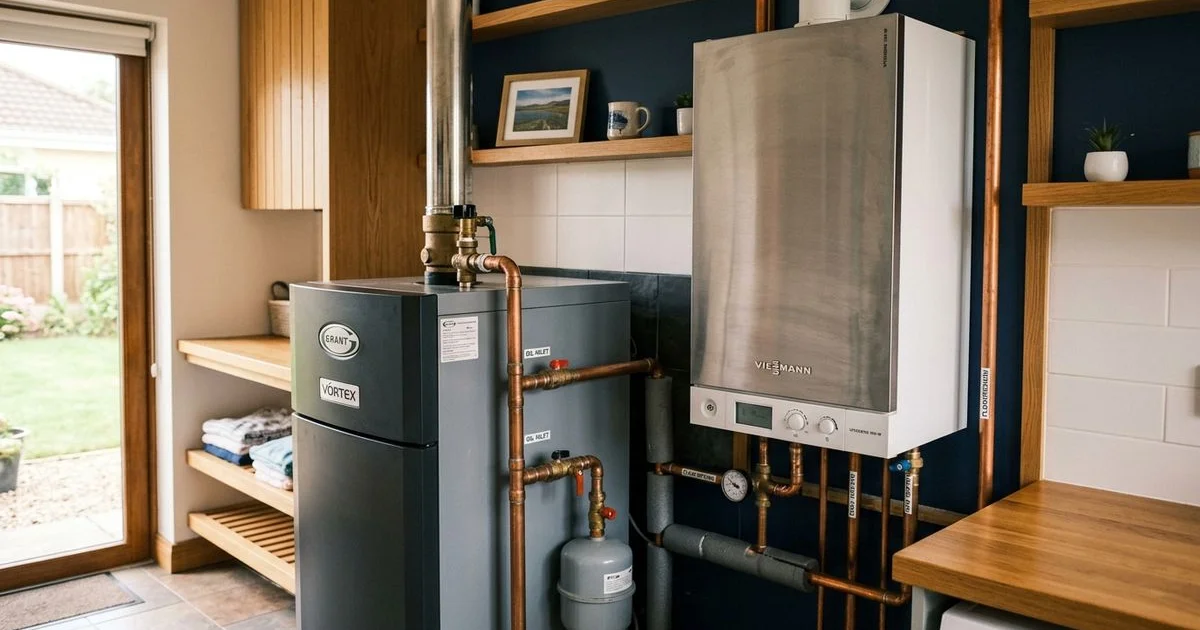
Modern condensing oil boilers are highly efficient machines. Brands like Grant and Firebird dominate the Irish market for good reason. Our engineers frequently install the Grant Vortex range because of its unique turbulator baffle system. This specific design extracts latent heat that older models would normally lose through the flue. You can expect efficiency ratings of 92% to 95% from these top-tier units.
Heat Pump (Air Source)
We see air source heat pumps as a refrigerator running in reverse. The system extracts heat from the outside air and uses a refrigerant cycle to amplify that energy. Most new installations, like the Warmflow Zeno range, now use R290 propane refrigerant. This natural refrigerant has an ultra-low global warming potential compared to older chemicals. Our installers prefer these modern units because they deliver consistent heat even during freezing Irish winters.
For every 1 kWh of electricity consumed, the pump produces 2.5 to 4 kWh of heat. This efficiency is measured as the Coefficient of Performance (COP). A COP of 3 means you get three times more heat energy than the electrical energy you pay for. Ground source heat pumps are more efficient but require expensive ground excavation.
Upfront Costs
This is where traditional systems hold a clear financial advantage. A standard installation involves swapping out the old unit for a modern condensing model. Our typical pricing for a complete replacement reflects current market rates.
- Like-for-like replacement: €3,500 to €5,500
- Including new controls and system flush: €4,000 to €6,000
- SEAI grant availability: €0 for direct fossil-fuel replacements
Heat Pump Installation Cost
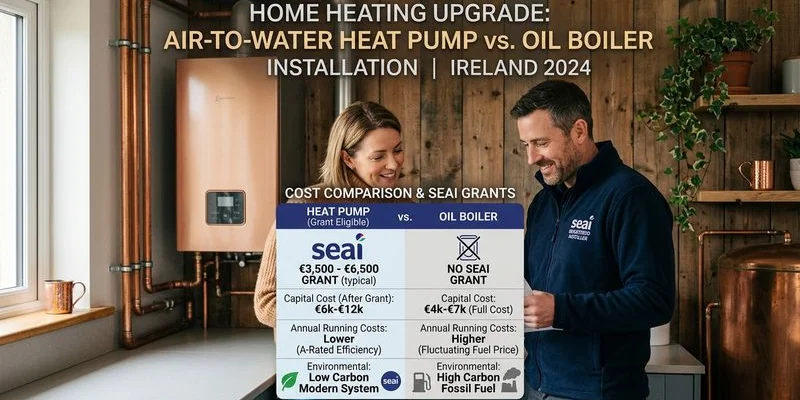
The financial landscape for renewable heating changed massively in February 2026. The SEAI introduced the National Residential Retrofit Plan, completely restructuring the available support. Our clients are now taking advantage of much higher subsidies, especially when upgrading their hot water cylinders at the same time.
- Heat pump unit: €4,000 to €8,000
- Installation, pipework, controls: €3,000 to €6,000
- Radiator and cylinder upgrades: €1,500 to €4,000
- Total before grant: €8,500 to €18,000
- Maximum SEAI grant (2026): Up to €12,500
- Total after grant: €3,000 to €5,500 (for qualifying homes)
The new €12,500 maximum grant makes the upfront cost highly competitive. This funding bundle includes €6,500 for the unit, €2,000 for radiator upgrades, and a €4,000 bonus for swapping away from fossil fuels.
Running Costs
Global conflicts in early 2026 pushed heating oil prices significantly higher. The national average spiked to roughly 153 cent per litre by March. We monitor these rates closely to give accurate advice. An average three-bedroom home uses between 1,300 and 2,000 litres annually.
At 153 cent per litre, annual heating costs look like this:
- Well-insulated home: €1,989 to €2,300
- Moderately insulated home: €2,300 to €2,750
- Poorly insulated home: €2,750 to €3,060+
Carbon taxes will continue to rise each year until 2029. This guarantees that fossil fuel heating will become progressively more expensive.
Heat Pump Running Costs
Electricity prices in Ireland remain elevated in 2026. The national average unit rate sits around 36.34 cent per kWh as of March. Our customers achieve the best savings by switching to dedicated smart tariffs. Some providers, like Community Power, offer off-peak rates as low as 28.80 cent per kWh.
Using an average rate of 36 cent per kWh and a seasonal COP of 3, annual costs are:
- Well-insulated home: €800 to €1,100
- Moderately insulated home: €1,100 to €1,500
- Poorly insulated home: €1,500 to €2,000+
Night-rate electricity changes the equation completely. Running the system primarily during off-peak hours can cut these running costs by another 20% to 30%.
Payback Period
The updated 2026 SEAI grants have drastically shortened the payback period for renewable systems.
| Home Insulation Level | Extra Cost (After 2026 Grant) | Annual Saving vs Oil | Estimated Payback |
|---|---|---|---|
| Well insulated | €0 - €2,000 | €800 - €1,200 | 0-3 years |
| Moderately insulated | €1,000 - €3,000 | €600 - €800 | 2-5 years |
| Poorly insulated | €3,000 - €6,000 | €200 - €400 | 8-15 years |
These figures highlight a clear financial reality. Upgrading makes immediate financial sense if your property retains heat well.
Is Your Home Suitable for a Heat Pump?
Not every property is ready for a low-temperature heating system. Several strict criteria determine your eligibility.
Insulation Level
This is the absolute most critical factor for success. Renewable systems operate at much lower water temperatures than traditional boilers, usually 35 to 45 degrees Celsius compared to 60 to 80 degrees. We always check the Building Energy Rating (BER) before recommending an installation. Your home will struggle to reach a comfortable temperature if it loses heat quickly.
Minimum recommended standards:
- Attic insulation: 300mm+ of mineral wool
- Wall insulation: Pumped cavity fill or external wrap
- Windows: Modern double or triple glazing
- BER rating: B3 or better is ideal
Properties with a D rating or lower require insulation upgrades first.
Radiator Size
Lower water temperatures mean your existing radiators might be too small. Standard single-panel radiators cannot emit enough heat at 45 degrees Celsius. Our plumbing teams often replace these with larger double-panel or aluminium radiators.
Underfloor heating is the perfect partner for this technology. It covers a massive surface area and operates perfectly at very low temperatures. We highly recommend installing underfloor loops if you are planning a new extension.
Space for the Outdoor Unit
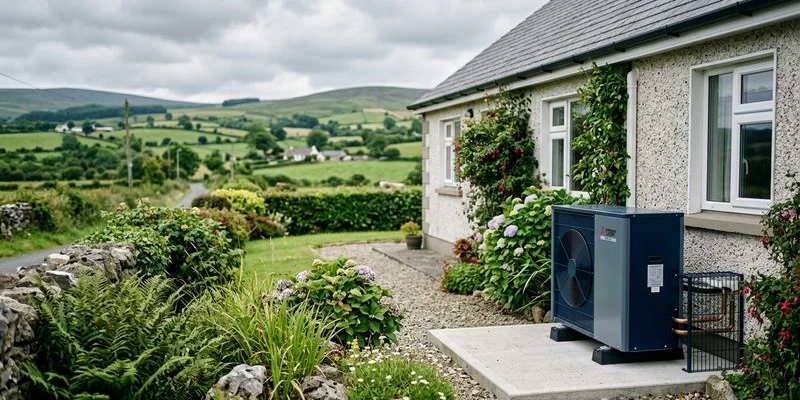
The external unit requires adequate clearance to draw in ambient air. Most models are roughly the size of a standard washing machine.
- Needs a solid, flat concrete base
- Requires at least 300mm of clearance from walls
- Produces roughly 42-50 dB of noise at 1 metre
- Must be easily accessible for annual servicing
Electrical Supply
These systems draw significant electrical current upon startup. A standard domestic single-phase supply works for most units under 12 kW. Larger properties might require a three-phase electrical upgrade. We evaluate your main fuse board during our initial site survey to confirm capacity.
Environmental Impact
Renewable heating drastically lowers your household carbon emissions.
| Metric | Modern Oil Boiler | Heat Pump (COP 3) |
|---|---|---|
| CO2 per kWh of heat | 0.27 kg | 0.09 kg |
| Annual CO2 (Typical home) | 4,000 - 6,000 kg | 1,300 - 2,000 kg |
| Carbon reduction | Baseline | 60-70% lower |
The national electricity grid becomes greener every single year. Ireland is targeting 80% renewable electricity generation by 2030. Our environment benefits immensely as wind and solar power replace gas power plants. Fossil fuel boilers will always produce the exact same amount of carbon pollution.
SEAI Grants for Heat Pumps
The February 2026 National Residential Retrofit Plan changed everything. The government nearly doubled the available financial support.
Individual Energy Upgrade Grants (2026)
The new grant structure makes upgrading incredibly attractive.
- Heat Pump System: Up to €6,500
- Central Heating Upgrade (Radiators): Up to €2,000
- Renewable Heat Bonus (Replacing fossil fuels): €4,000
- Total Maximum Grant: Up to €12,500
Additional Upgrade Funding
You can access extra funds if your property needs more work. The SEAI introduced a new standalone Windows and Doors grant in March 2026. This provides up to €4,000 for energy-efficient glazing upgrades. We strongly advise applying for attic insulation grants to ensure your property meets the heat loss criteria.
Fully Funded Upgrades
Certain households qualify for the Warmer Homes Scheme. The government covers 100% of the cost for eligible applicants receiving specific welfare payments.
How to Access the Funding
- Hire an independent assessor for a technical BER assessment.
- Apply through the official SEAI online portal.
- Wait for formal written approval before starting any work.
- Hire registered professionals for the installation.
- Submit your final BER and completion documents for payment.
Our team will guide you through the application process as part of our heat pump installation service.
When Oil Still Makes Sense
Traditional heating remains the logical choice in several specific scenarios.
- Your home has a poor BER rating and a deep retrofit is outside your current budget.
- You need emergency heat today because a broken boiler leaves you freezing, whereas renewable setups require weeks of planning.
- You plan to move house soon and want to minimise immediate capital expenditure.
- Your exterior space is restricted and cannot comfortably house a large fan unit.
Upgrading an old 70% efficient unit to a new 95% efficient Grant Vortex still cuts your fuel consumption dramatically. We fit many of these systems for customers who plan to wait a few more years before going fully renewable.
Heat Pump vs New Oil Boiler: What is the Clear Winner?
Renewable technology is the definitive winner under the right conditions. You should absolutely claim the €12,500 grant if your situation matches these criteria.
- Your property is highly insulated (BER B3 or better).
- You already have underfloor heating or are willing to upgrade your radiators.
- You want immunity from carbon taxes and unpredictable global oil markets.
- You intend to live in the property for the next decade to realise the full financial payback.
Our specialists believe the massive 2026 grant increase shifts the balance heavily in favour of renewable energy for modern homes.
Our Recommendation
We base our advice strictly on your property’s thermal performance. A renewable system is a spectacular investment for well-insulated properties in the midlands. The 2026 SEAI grants eliminate the massive upfront cost barrier that previously held people back.
Properties with poor insulation need a different approach. Installing low-temperature radiators in a draughty house is a recipe for high electricity bills and cold evenings. Our engineers suggest upgrading your insulation first if your budget allows.
A modern condensing oil boiler remains a completely valid and sensible bridge technology. You can secure reliable, efficient heat now and transition to greener technology in the next decade.
Let Us Help You Decide
Every single house requires a custom evaluation. The right heating solution for your neighbour might be the wrong choice for you. We provide comprehensive assessments to clear up the confusion at Emergency Plumber Athlone.
Measuring your rooms, checking your existing pipework, and evaluating your electrical supply panel allows us to give you a factual, pressure-free recommendation. When deciding on a Heat Pump vs New Oil Boiler: What you choose dictates your comfort for the next decade.
Contact us today to arrange a free consultation about a heat pump installation or a new oil boiler replacement.
This guide was written by the team at Emergency Plumber Athlone, RGI registered plumbing and heating engineers installing heating systems across Athlone, Westmeath, Roscommon, and East Galway since 2015.
Emergency Plumber Athlone
Plumbing & Heating Engineers
The team at Emergency Plumber Athlone have been providing dependable plumbing and heating services across County Westmeath, Roscommon, and East Galway since 2015. RGI registered and fully insured.
RGI Registered Gas Installer