Does Your Home Need a Power Flush? The Hidden Cause of Cold Radiators
Discover why your radiators are cold at the bottom, how sludge builds up in heating systems, and whether a power flush is the right solution for your home.
Emergency Plumber Athlone
24 November 2025
We often see homeowners struggling with radiators that refuse to warm up fully. Does your home need a power flush? The hidden cause of cold radiators is usually a thick buildup of dirt inside your pipework.
Our team knows that this blockage forces your system to work harder and drives up your energy bills. Let us look the facts behind heating sludge and explore exactly how to resolve it.
This common problem has a very straightforward solution.
What Is Heating Sludge?
We find that many people are surprised to learn what heating sludge actually is. This dark material is formally known as magnetite, which is a byproduct of internal rust. Our engineers frequently explain that water reacts with the steel in your radiators to create this iron oxide. The process is completely natural but creates a heavy mud that restricts your circulation.
The Impact on Your System
We have seen severely neglected systems where the pipes become completely blocked. Sludge settles at the bottom of radiators because it is heavier than water. Our experience shows that this buildup damages boiler heat exchangers and leads to expensive breakdowns. A small amount of debris might not cause noticeable problems immediately. Over years, the accumulation becomes significant enough to restrict flow and cause real damage.
Signs Your Heating System Has Sludge
We always advise homeowners to watch out for a few specific warning signs. These symptoms indicate that magnetite is starting to choke your pipework.
1. Radiators Cold at the Bottom
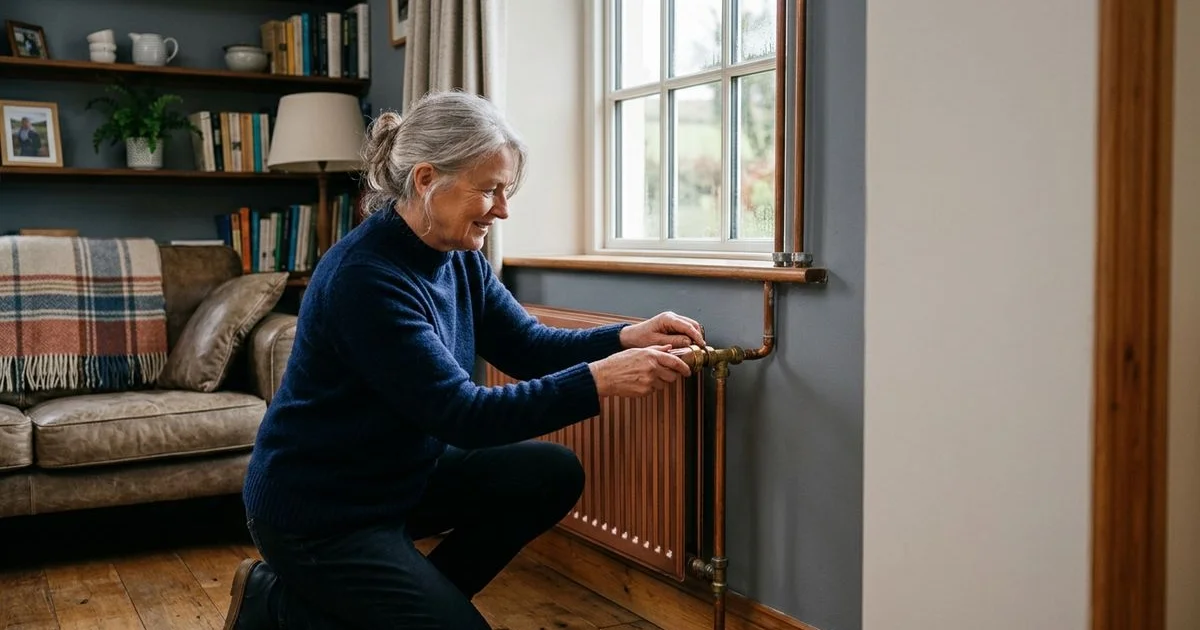
Our team often uses thermal imaging cameras to spot this classic symptom. A hot top and cold bottom mean sludge has settled at the base. Many people mistake this for an air lock. Bleeding the radiator will not fix a solid magnetite problem.
2. Some Radiators Do Not Heat Up at All
We sometimes encounter homes where entire rooms stay freezing cold. This usually happens when sludge blocks the thermostatic radiator valve pin. The hot water simply cannot flow into that specific unit.
3. Your Boiler Makes Banging or Kettling Noises
Our technicians hear this alarming sound constantly in hard water areas. The noise happens when sludge and limescale bake onto the boiler heat exchanger. This creates local hotspots that cause the water to literally boil and expand into steam.
4. The Heating Takes a Long Time to Warm Up
We consider 15 to 20 minutes to be the normal warm-up time for a healthy system. Restricted flow caused by sludge will often push this beyond 30 minutes. Your boiler burns fuel for much longer without actually heating the room.
5. You Are Bleeding Radiators Frequently
Our repair crews often find that constant bleeding points to active internal corrosion. The rusting process releases hydrogen gas, which gets trapped at the top of your radiators. This trapped gas accelerates the decay even further.
6. Discoloured Water When Bleeding
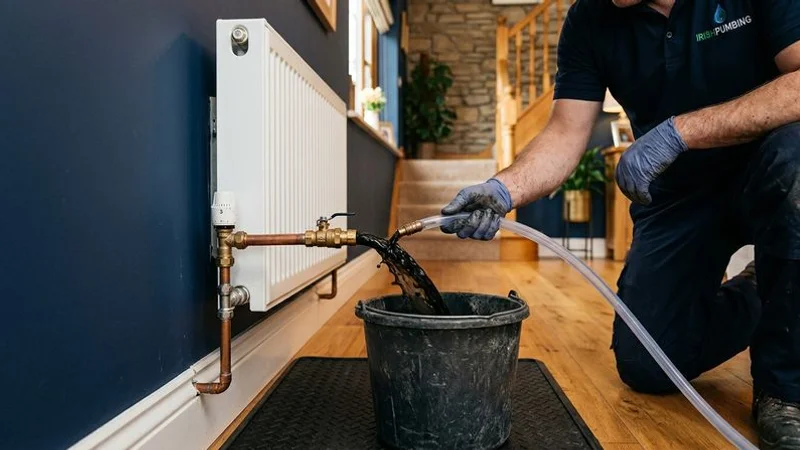
We recommend checking the colour of the water when you open a bleed valve. Dark and dirty water is a clear visual confirmation of iron oxide. Clear water means the system is relatively healthy.
What Is a Power Flush?
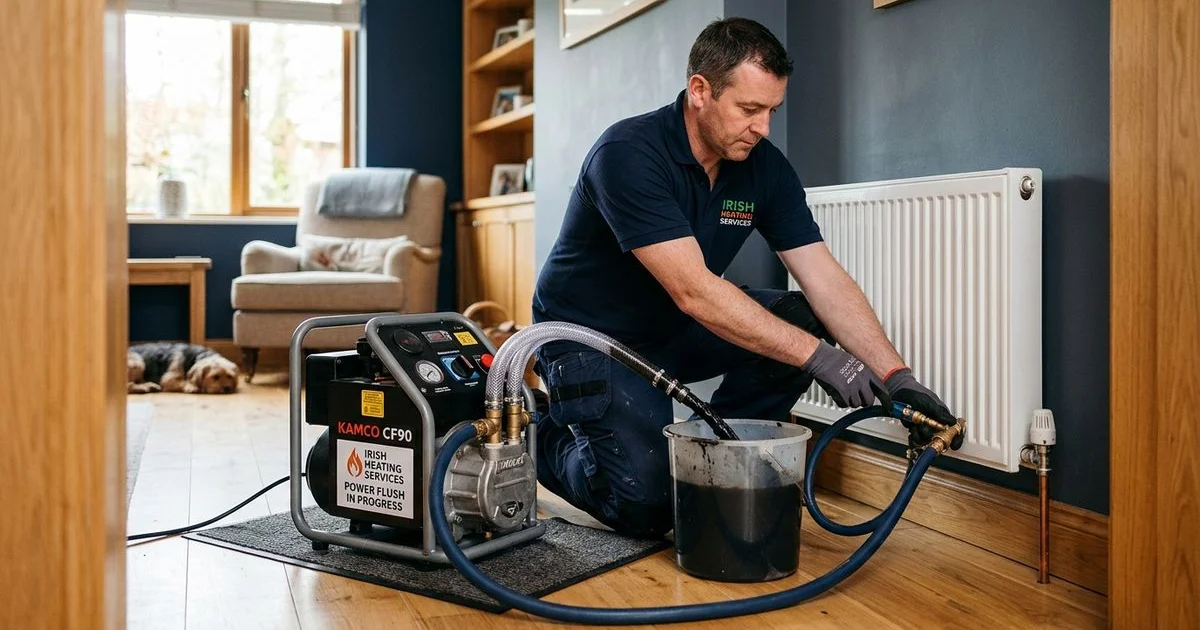
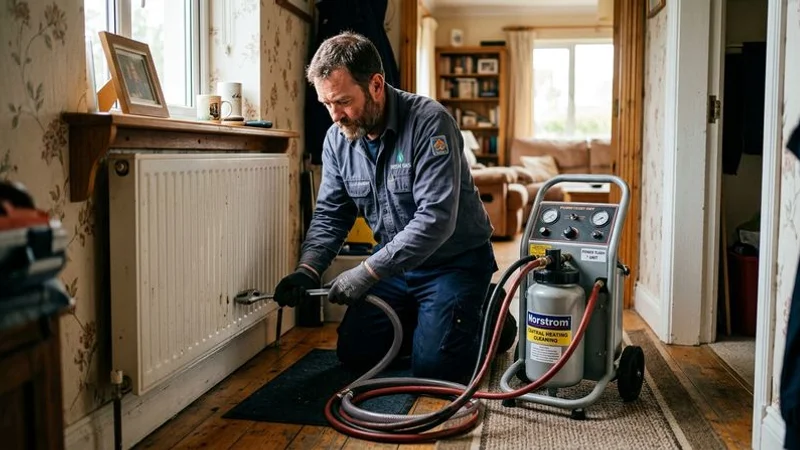
We use specialised machinery to perform a deep clean of your entire central heating system. A proper power flush pumps treated water through the pipework at a high velocity of up to 150 litres per minute. Our equipment maintains a safe, low pressure of around 2 bar to dislodge debris without straining old joints. The dirty water is expelled and replaced with clean water treated with a chemical inhibitor.
This thorough process typically takes between four and eight hours. The exact timing depends on the number of radiators and the severity of the magnetite buildup. Each radiator is isolated and cleaned individually to guarantee maximum results.
How It Differs from a Regular Flush
We frequently explain that a standard drain-and-refill only removes loose, floating debris. A high-flow pump is required to lift and shift heavily compacted sludge. This targeted approach is far more effective at clearing stubborn blockages.
When Should You Get a Power Flush?
We recommend this deep cleaning process for several specific situations. These scenarios are when the treatment provides the greatest return on investment.
Before Installing a New Boiler
Our engineers insist on a clean system before fitting a new boiler or a heat pump. Installing modern equipment on a dirty system will quickly ruin the new heat exchanger. Major manufacturers like Worcester Bosch and Grant require a clean system to validate their warranties. Under the 2026 SEAI heat pump grant rules, a mechanical flush matching the BS 7593 standard is strictly mandatory.
When Radiators Have Cold Spots
We know that uneven heating is a guaranteed sign of restricted flow. A professional clean will restore even heat distribution across every single panel.
When Your Boiler Is Losing Efficiency
Our commercial data shows that heavy sludge forces a boiler to work much harder. This extra strain directly increases your monthly gas or oil bills. Cleaning the pipework restores the setup to near-original efficiency.
After a Boiler Breakdown
We always include a flush as part of the repair process if a pump seizes from debris. The same dirt that ruined the first component will quickly destroy the replacement part.
When Your System Is More Than 10 Years Old
Our typical midlands customer has a heating setup that is well over a decade old. Even without obvious cold spots, a ten-year-old system holds a massive amount of hidden sediment.
What Happens During a Power Flush?
We follow a strict, step-by-step procedure to ensure nothing is missed. This professional workflow delivers the best possible clean.
- Assessment: The engineer checks radiator temperatures and evaluates the severity of the blockage.
- Connection: The cleaning machine is attached directly to the circulation pump or a radiator tail.
- Chemical treatment: A heavy-duty cleaning agent, like Sentinel X400, is circulated to break down hard deposits.
- Flushing: The machine drives the treated water through the network at high speed. Each radiator is isolated to concentrate the flow.
- Draining: The dark, contaminated water is pushed out of the property until the discharge runs crystal clear.
- Treatment: Fresh water is introduced along with a high-quality corrosion inhibitor, such as Sentinel X100.
- Testing: The engineer fires up the boiler to verify that all panels are heating evenly.
How Much Does a Power Flush Cost in Ireland?
We know that price is a major factor for homeowners facing heating issues. Current 2026 data shows that the cost in Ireland typically ranges from €300 to €700. Our final quote always depends on the size of your property and the number of radiators involved.
| Property Size | Number of Radiators | Estimated Cost Range (2026) |
|---|---|---|
| Small Home | 1 to 5 Radiators | €300 to €400 |
| Medium Home | 6 to 10 Radiators | €400 to €550 |
| Large Home | 11+ Radiators | €550 to €700+ |
We strongly view this expense as a protective investment. A blocked heat exchanger replacement alone can easily cost €500 to €800. A brand new boiler will run anywhere from €2,500 to €5,000. Paying for a deep clean every decade protects those expensive components and lowers your monthly fuel bills.
Can You Do It Yourself?
We strongly advise against attempting this as a DIY project. A true deep clean requires industrial Kamco or ADEY machinery that pumps at high velocity. Our professionals know how to manage the flow so that the pressure never exceeds 2 bar, which prevents burst pipes.
There are basic magnetic filter kits that a confident amateur could attempt to drain. These basic drain-and-refill methods lack the sheer velocity needed to shift compacted magnetite. You should always have a qualified heating engineer assess the situation if you suspect a serious blockage.
Preventing Sludge Buildup
We want your heating to remain highly efficient for years after the initial clean. There are several proven strategies you can use to stop magnetite from returning.
- Add corrosion inhibitor annually: This chemical treatment is your main line of defence. Premium brands like Fernox Protector F1 or Sentinel X100 actively stop the metal from rusting.
- Install a magnetic filter: An inline unit, like the ADEY MagnaClean Professional 2, captures stray iron oxide particles before they settle in your radiators.
- Get an annual boiler service: A routine boiler service gives the technician a chance to check the inhibitor levels.
- Bleed radiators regularly: Releasing trapped air stops the internal oxygen from accelerating the rusting process.
Does Your Home Need a Power Flush? The Hidden Cause of Cold Radiators
We hope this breakdown helps you understand exactly what is happening inside your pipes. Cold panels, noisy boilers, and rising heating bills are serious symptoms of a failing network.
Left unchecked, heavy magnetite will absolutely lead to premature boiler failure and freezing rooms. Does your home need a power flush? The hidden cause of cold radiators is easily cured with a professional, high-velocity clean.
Need a Power Flush in Athlone or the Midlands?
We are ready to help if you suspect your heating network is choked with debris. Professional preparation is essential before any new boiler installation.
At Emergency Plumber Athlone, we provide professional power flushing services across Athlone, Moate, Ballinasloe, Roscommon, and the wider midlands region.
Call us on 090-664 1014 for a free assessment and quote. We will inspect your pipework, advise on the best course of action, and get your home back to a comfortable temperature.
Emergency Plumber Athlone
Plumbing & Heating Engineers
The team at Emergency Plumber Athlone have been providing dependable plumbing and heating services across County Westmeath, Roscommon, and East Galway since 2015. RGI registered and fully insured.
RGI Registered Gas Installer